
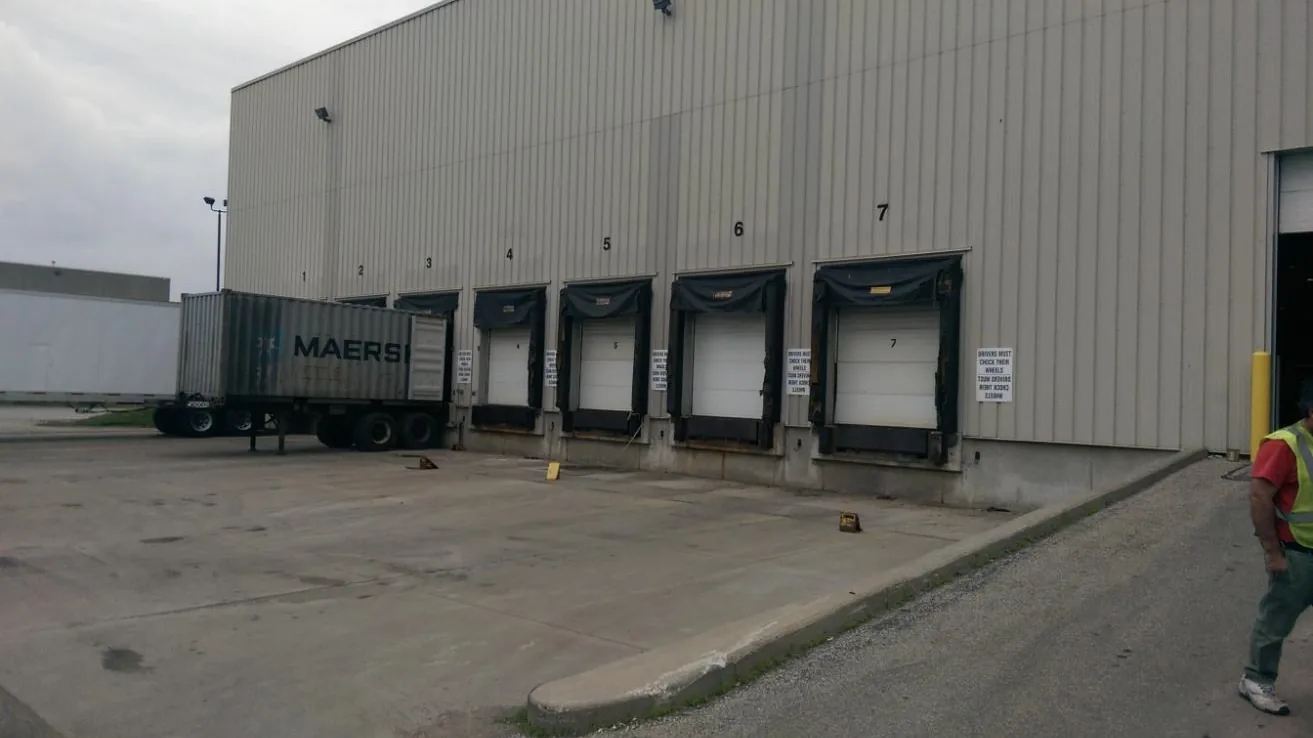
A trailer leaving Mississauga for Calgary in July and the same trailer leaving in January are two different trips. Same lane, same freight, same driver. What changes is everything along the 3,400 km in between: Highway 17 north of Superior, the Prairies in a crosswind, the Rockies at Rogers Pass. This is what we tell customers to plan for before the first real snowfall, which in Ontario tends to land before anyone is ready for it.
On a normal week a full truckload from our dock to Calgary runs about four days. In winter we quote the same transit and tell you plainly that it can become five or six. The usual culprits are closures: Highway 17 between Sault Ste. Marie and Thunder Bay shuts for whiteouts and wrecks, the Coquihalla and Rogers Pass close for avalanche control, and a 400-series pileup can hold a truck for half a day before it ever leaves the province. Drivers are also on hours-of-service, so a six-hour closure is not six hours late, it is a full rest cycle late.
The fix is not complicated. For Western Canada and anything through Northern Ontario, build a day of buffer into what you promise the receiver. If a delivery appointment carries a penalty, book it for the day after the trailer is expected, not the day of. Our dispatcher tracks the truck and tells you the moment a closure is in play, but nobody can drive through a closed mountain pass.
Paint, adhesives, sealants, liquids in drums and totes, food product, pharmaceuticals, batteries and anything water-based will freeze in a dry van crossing Manitoba at minus 30. Protect-from-freeze service means the freight rides in a heated or insulated trailer, or it waits inside a warehouse until a direct truck can take it without sitting over a weekend at a terminal.
Two things to know. Heated capacity is limited and it goes to whoever books first, so a December protect-from-freeze load should be on our board in November. And LTL is the risk, not FTL. A full truckload moves dock to dock. An LTL shipment can sit on a cold cross-dock in Winnipeg for two days between linehauls. If the product is freeze-sensitive and the shipment is small, ask us about holding it in the Mississauga warehouse and consolidating it onto a direct trailer with other freight going the same way. It is often cheaper than heated LTL and it keeps the product off a terminal floor.
November and December are already peak. Retail inbound, year-end production pushes and everyone trying to ship before the holiday shutdown. Add weather, and the trucks that would have been available are stuck two provinces away waiting for a road to open. The result is higher spot rates and fewer options for anyone booking the week they need to ship.
Book early, book full trailers where you can, and give dispatch the whole month's picture rather than one load at a time. If we know six skids are going to Edmonton every week until March we can hold the lane. If we find out Thursday for Friday, it is whatever is left.
The trailer arrives on time and the receiver has not plowed. The driver cannot back to a dock he cannot see, and a power-tailgate delivery onto an icy lot is a skid of product on its side and a driver on workers' comp. Those deliveries get refused, and refused freight comes back to our dock and gets billed to go out again.
Before you ship into a site without a dock in winter, confirm who clears the approach and the drop area. For construction sites and new builds that often means a call the morning of. Our drivers will work with a receiver who is ready, and they will not unload onto a sheet of ice.
Vancouver and Prince Rupert back up in winter. Vessel schedules slip, rail dwell climbs when the mountain lines are running avalanche control, and a container that was due in Toronto on a Monday shows up Thursday. None of that stops free time from counting once the box lands. We covered demurrage and detention in detail, but the winter version is: watch the ETA daily, have the drayage booked before the box arrives, and if the receiver is not ready, transload it at our dock and send the empty back rather than letting it sit on a chassis in the snow.
Book a week earlier than you would in summer. Tell us if it can freeze. Give the receiver's appointment a day of room. Make sure someone is clearing the yard at the other end. Do those four things and winter is a slower season, not a lost one.
Send dispatch the lane, the dates and whether it can freeze. Same-day quotes at 289-723-2174.
Get a Quote