
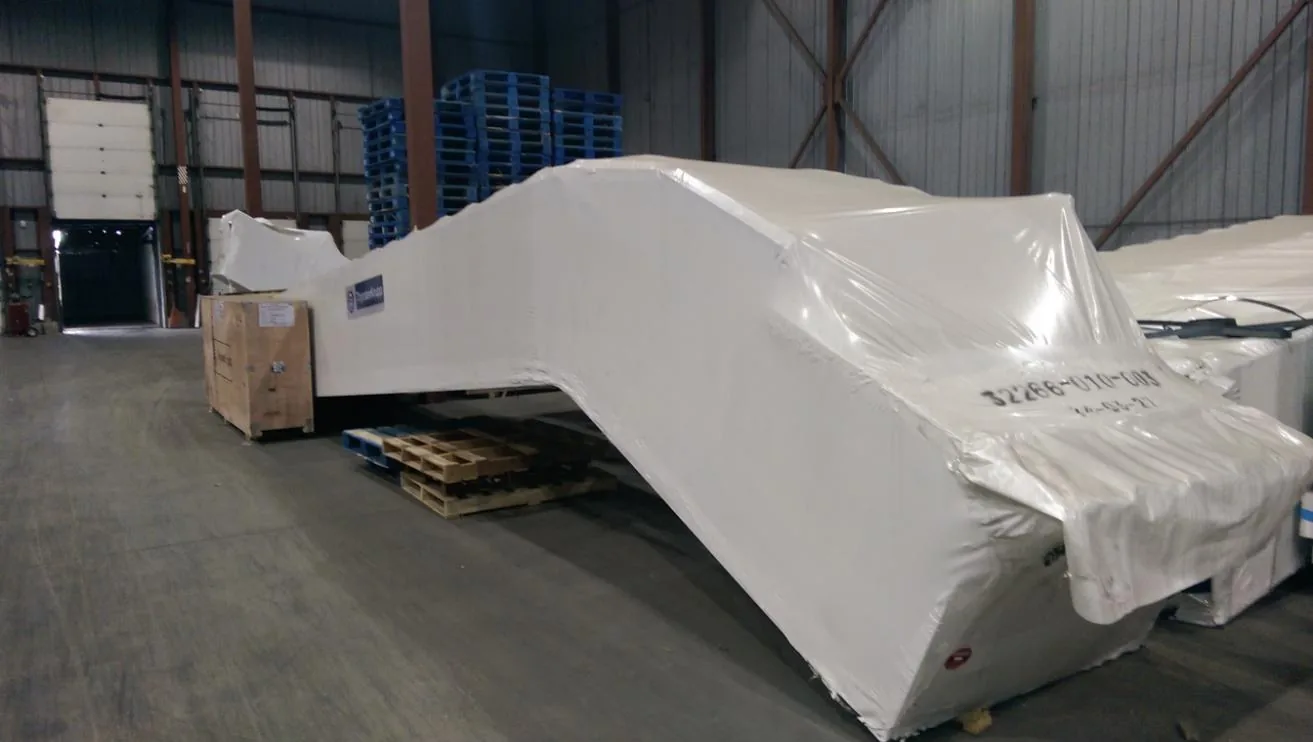
Most freight in Ontario moves in a 53 foot dry van, and most of the time that is the right truck. Then a shipment comes along that does not fit through the back doors, cannot be lifted by a forklift from the rear, or weighs as much in one piece as a full load of pallets. That freight goes on a flatbed. We run more than twenty of them out of Mississauga, and the calls we get about flatbed moves are almost always the same handful of questions. This post answers them.
A dry van has a roof, two walls and one way in. Anything loaded into it has to go through a door opening a little over eight feet wide and nine feet high, and it has to be pushed or carried the length of the trailer from the back. A flatbed has none of those limits. It loads from either side or from above, which is what these shipments need:
If the freight is palletized, stackable and under about eight feet tall, it belongs in a van and it will cost less there. If you are not sure, the dimensions and a photo settle it in one email. We covered the van side of the decision in LTL or FTL.
Nothing on a flatbed is held by walls, so everything is held by chains, straps and blocking. Cargo securement in Ontario follows National Safety Code Standard 10, which sets how many tie-downs a load needs for its weight and length and how strong they have to be. In practice that means chains and binders for machinery and steel, straps with edge protection for crated and wrapped freight, and wood blocking under and against anything that could roll or slide.
The driver is responsible for the securement and checks it again on the road. The shipper's part is giving the driver something to secure to. A machine with lifting lugs and a flat base is simple. A machine on a skid that was never meant to carry it, with nowhere to put a chain that is not a hydraulic line or a sheet metal guard, is where loading takes an hour longer than planned. If your shipment has specific tie-down points or surfaces that cannot be touched, tell dispatch when you book.
Freight that cannot get wet or take road salt gets tarped. Tarping is normal on a flatbed and it is part of the quote, but it has to be asked for, because the driver needs to bring the right tarps for the height and shape of the load.
Ontario lets a truck carry a load up to 2.6 metres wide and 4.15 metres high, measured from the road, without a special permit. A standard flatbed deck sits about a metre and a half off the ground, so freight up to roughly two and a half metres tall and the full width of the deck travels as an ordinary load on an ordinary day.
Past either number the move needs an oversize permit from the Ministry of Transportation. A permit names the route and the days the load can travel, and depending on how far over the load is, it can add flags and signs, restrict travel to daylight, or require an escort vehicle. None of that is unusual, but it takes lead time. A load that is a few inches over width is a different job from a load that is legal, and the difference has to be known before the truck is booked, not when the driver puts a tape measure on it at pickup.
Weight works the same way it does for containers. The limit is on the axles, not just the total, so one dense piece sitting at one end of the deck can be a problem at a weight the trailer could carry easily if it were spread out. We went through the axle rules in overweight containers in Ontario, and the same thinking applies to a machine on a flatbed.
Flatbed shipments have a habit of arriving before anyone is ready for them. The machine lands from overseas three weeks before the plant floor is poured. The steel is fabricated before the site can take it. This is where having a warehouse attached to the trucks matters. Our 200,000 square foot facility at 7035 Ordan Drive takes odd-dimensional and project cargo every week. The warehouse crew has more than twenty years of experience loading and offloading freight that does not come on a pallet, and it can sit on the floor, crated or wrapped, until the day the receiver calls for it.
The same applies to import freight. An open top or flat rack container comes in from the rail terminal on our own chassis, the cargo is lifted out at our facility, and it goes back out on a flatbed sized to the piece. One arrival notice covers the drayage, the handling and the final delivery.
Our own flatbeds cover the GTA and the lanes Ontario businesses ship on every day. For moves across Canada and into the United States, the Interline Division books the lane with a partner carrier and the file stays with the same dispatcher, as described on the national network page. Either way it is one phone number, one quote and one invoice, with LTL and FTL van freight on the same desk if the rest of the order is on pallets.
Send dispatch the dimensions, the weight and a photo, and we will tell you what truck it needs and what it costs to move. Same-day quotes at 289-723-2174.
Get a Quote